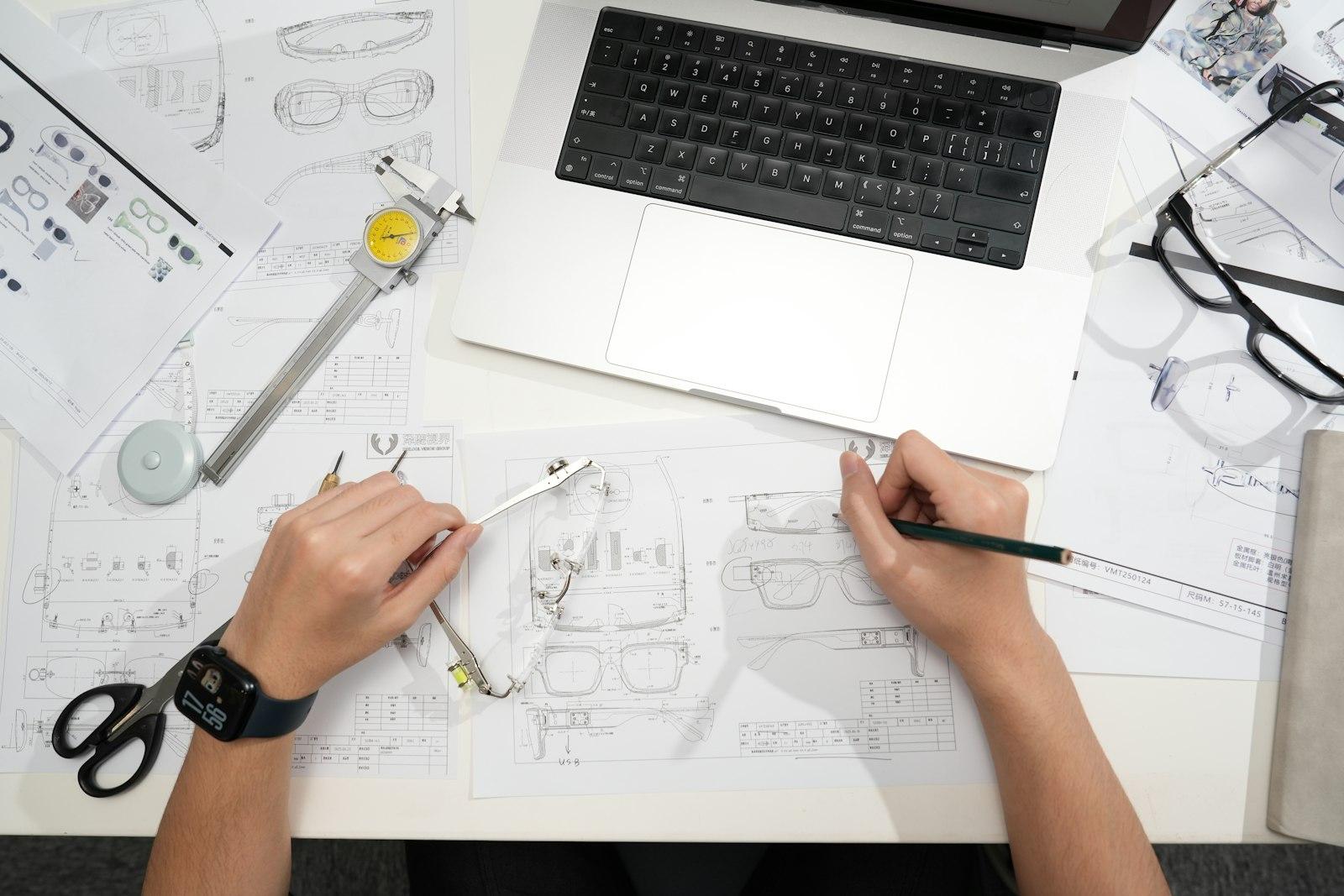
Product Designer responsibilities
- Design flows and interfaces for new features
- Run user research and usability tests
- Build and maintain the design system in Figma
- Prototype ideas to test them before they are built
- Work with engineers through handoff and QA
- Use data and feedback to improve existing screens
What to require
- Professional experience designing digital products that shipped
- A portfolio with real problems, process and outcomes
- Strong Figma skills, including components and auto layout
- Experience with user research and usability testing
- Professional English for daily written and spoken work, verified in interview
- Able to work your business hours from a time zone 0 to 3 hours from the US
What a product designer's work looks like
A product designer decides how your product works and how it looks, based on what users need and what the business wants. They research problems, map flows, design interfaces, prototype ideas, test them with users and work with engineers until the result ships the way it should.
Companies hire a product designer when engineers are designing screens by default, when users get lost in flows that grew one feature at a time, when every screen looks slightly different, or when the team keeps building features nobody uses. A good product designer reduces wasted engineering time, because the right thing gets built the first time more often.
Discovery and research
- Interviews, usability tests and surveys that answer specific questions
- Journey maps and problem statements the team can rally around
- Analysis of support tickets, analytics and session recordings
Interaction and UI design
- User flows, wireframes and high-fidelity screens for web and mobile
- Interactive prototypes to test ideas before code is written
- Every state designed: empty, loading, error, success and edge cases
Design systems and delivery
- Components, tokens and guidelines in Figma that match the code
- Clear handoff with specs, annotations and acceptance criteria
- Design QA on staging before release
Which product designer do you need?
| Focus | Best for | What they own |
|---|---|---|
| Generalist product designer | Startups and small product teams | Research, flows, UI and handoff end to end |
| UX designer | Complex workflows and B2B tools | Information architecture, flows, usability |
| UI and visual designer | Products that need polish and brand consistency | Visual language, components, details |
| Design systems designer | Teams with several products or squads | Component library, tokens, documentation |
| Growth designer | Teams focused on conversion and activation | Onboarding, paywalls, experiments |
| UX researcher | Teams making big bets with unclear needs | Research plans, studies, insights |
Most startups need a generalist who can research, design and ship. Specialists make sense once you have several designers or very specific needs.
Product designer or another profile?
- Choose a product designer when the question is what to build and how it should work for users.
- Choose a Product Manager when the question is which problems to solve and in what order.
- Choose a React Developer when designs are ready and the bottleneck is building them.
- Choose a Marketing Manager when the need is campaigns and brand, not product flows.
How a remote product designer fits into your team
Involve them early
Designers add the most value before a solution is chosen. Bring them into problem definition with product and engineering, not only after the feature is specified.
Give them access to users
Customer calls, support tickets, analytics, session recordings. A designer without access to users designs from opinion. Schedule regular research sessions, even two or three a month.
Agree on a design process
How ideas move from problem to shipped feature: discovery, concepts, review, high fidelity, handoff, QA. Keep it light, but write it down so engineers know when designs are ready.
Keep design and code in sync
A design system that matches the coded components saves weeks. Pair your designer with a front-end developer to keep Figma and code aligned.
Hold regular critiques
Short design reviews where the team gives feedback on the problem being solved, not personal taste. With 0 to 3 hours of time difference, critiques happen live.
Measure design by outcomes
Task success in usability tests, activation and conversion on redesigned flows, support tickets about confusing screens and time from idea to shipped feature.
The design toolkit: what to require and what is nice to have
| Area | Require | Nice to have |
|---|---|---|
| Design tools | Figma: components, variants, auto layout, prototyping | FigJam workshops, plugins, design tokens |
| Research | Usability tests and user interviews | Surveys at scale, quantitative research |
| Interaction | Flows, information architecture, states | Motion design, micro-interactions |
| Visual | Typography, layout, color, consistency | Illustration, brand design |
| Systems | Using and extending a design system | Building one from scratch, tokens in code |
| Accessibility | Contrast, focus, readable text, WCAG basics | Screen reader testing, audits |
| Collaboration | Handoff, design QA, working with engineers | Basic HTML and CSS, prototyping in code |
| Data | Reading analytics and funnels | A/B test design and analysis |
Common mistakes when hiring a product designer
Hiring on visual polish alone
Beautiful screens that solve the wrong problem waste engineering time. Test for problem framing and process.
Asking for unpaid spec work
Long free design tasks on your actual product drive away experienced designers. Use a short exercise or a portfolio deep dive instead.
Treating design as a service desk
If designers only receive tickets for screens, you get screens, not better products. Give them problems to own.
Forgetting accessibility
Accessibility is cheaper to design in than to fix later. Ask how candidates handle it.
Signature or Core for a product designer
Both tiers can be equally senior. The difference is spoken English and experience working for foreign companies.
| Signature | Core | |
|---|---|---|
| Monthly price | $6,450 | $4,700 |
| Spoken English | C1 or higher, or B2 with foreign-company experience | B1 to B2 |
| Worked for US or EU companies | Usually yes | Not yet |
| Best for | Running research with US users, leading design | Designing within an established system under a lead |
For product designers, Signature matters more than for most roles: interviewing and testing with English-speaking users requires fluent spoken English.
How to interview product designer candidates
A portfolio deep dive
Ask the candidate to walk you through one project for 30 minutes: the problem, the users, the options they explored, what they chose and why, what changed after testing and what the result was. Interrupt with questions. You learn how they think, not only what they made.
A short design exercise
"Our users abandon the onboarding at the step where they connect their data. Here is the current flow and some user feedback. Spend two hours proposing an improved flow, with key screens and a plan to test it." Ask for rough work, not pixel perfection.
Questions worth asking
- "How do you decide what to research and what to just design?" Strong answers weigh risk and cost of being wrong.
- "Tell me about a time research changed your design." Look for real evidence and humility.
- "An engineer says your design will take three weeks instead of one. What do you do?" Look for collaboration and simpler alternatives.
- "How do you design for empty and error states?" Expect concrete examples, not "we handle them later".
- "How do you know a redesign worked?" Good answers name metrics and qualitative signals.
- "How do you keep a design system consistent with code?" Expect working with developers, tokens and shared naming.
Scorecard
| Area | What a strong candidate shows |
|---|---|
| Problem framing | Starts with users and goals, not screens |
| Research | Picks the right method and acts on findings |
| Interaction design | Clear flows, every state covered |
| Visual craft | Consistent, accessible, polished UI |
| Collaboration | Works well with product and engineering, takes feedback |
How Anderise screens product designer candidates
Every candidate we send has already passed three steps:
- An English conversation that places them as Signature or Core
- A portfolio interview on process, decisions and outcomes
- A practical exercise: a short design problem with a testing plan
You then interview the candidates you like best and decide. You pay nothing until you pick someone.
What a good first 90 days looks like
Days 1 to 30
- Learns the product, users, design system and analytics
- Joins customer calls and reviews support tickets
- Ships a first design improvement on an existing flow
Milestone: a clear view of the biggest usability problems.
Days 31 to 60
- Leads design for a feature from problem to handoff
- Runs a first round of usability tests
- Cleans up inconsistencies in the design system
Milestone: engineers receive complete, tested designs.
Days 61 to 90
- Sets up a light research rhythm with regular user sessions
- Measures the impact of a shipped design change
- Proposes a design roadmap with product
Milestone: design decisions backed by evidence.
Product designer cost: US salary vs Anderise
| Option | Monthly cost | What it includes |
|---|---|---|
| US hire (median) | $8,650 | Base salary only |
| Anderise Signature | $6,450 | All-in: talent, local payroll, contract |
| Anderise Core | $4,700 | All-in: talent, local payroll, contract |
On these numbers, Signature costs 25% less than the US median salary and Core costs 46% less, before you add US employer taxes, benefits and recruiting fees to the US side.
Hiring a product designer in Latin America
Product designers in Latin America work from time zones 0 to 3 hours from US time, so they join critiques, planning and user sessions live with your product and engineering team.
With Anderise you do not need a local entity. We handle the contract and local payroll, and you pay one monthly invoice in USD by ACH or wire.
How hiring works
- A 20-minute call. You tell us about your product, users and team.
- A shortlist. You get 2 to 3 interviewed candidates by an agreed date, within 10 business days of the call.
- Your interviews. You meet the candidates you like and choose one.
- Start. The first month is invoiced before the start date. If the hire is not a fit in the first 14 days, we find a replacement at no extra cost.
Product Designer job description template
Use this as a starting point and cut what does not apply to your team.
About the role. We are looking for a product Designer to join our team and work closely with the people around them during US business hours.
What you will do
- Design flows and interfaces for new features
- Run user research and usability tests
- Build and maintain the design system in Figma
- Prototype ideas to test them before they are built
- Work with engineers through handoff and QA
- Use data and feedback to improve existing screens
What we are looking for
- Professional experience designing digital products that shipped
- A portfolio with real problems, process and outcomes
- Strong Figma skills, including components and auto layout
- Experience with user research and usability testing
- Professional English for daily written and spoken work, verified in interview
- Able to work your business hours from a time zone 0 to 3 hours from the US
Product Designer hiring FAQ
Through Anderise, a product designer costs $6,450 per month on Signature, the default option, or $4,700 per month on Core. Both are all-in prices on a 12-month term, on one monthly invoice, with payroll and contracts handled by Anderise and no deposit or placement fee. For reference, the median US salary for the closest occupation is $8,650 per month (BLS OEWS May 2025, SOC 15-1255).
Both can be equally senior. Signature designers speak English at C1 or higher, or at B2 with experience working for foreign companies. Core designers speak English at B1 to B2 and have not worked for foreign companies yet, so they fit best designing within an established system under a lead.
You get 2 to 3 interviewed candidates by an agreed date, within 10 business days of your first call. You pay nothing until you pick someone.
A UX designer focuses on research, flows and usability. A product designer covers UX and UI and works closely with product and engineering on what gets built and why. In small teams, the two titles often mean the same job.
Some can. Product design and brand design are different skills, so tell us if you need both and we screen for it.
Yes. Choose Signature for this, because interviewing and testing with English-speaking users requires fluent spoken English.
Yes. Our designers work from time zones 0 to 3 hours from US time and cover your business hours.
If the hire is not a fit in the first 14 days, we find a replacement at no extra cost.
You pay Anderise one monthly invoice in USD by ACH or wire. We handle contracts, local payroll and compliance in the designer's country.
No. Anderise holds the contract and runs local payroll. You sign one agreement with us.
Common signals: engineers design screens by default, users struggle with core flows, the interface looks inconsistent, or you are about to build a major new feature or product. Hiring before a big build usually saves more than it costs.